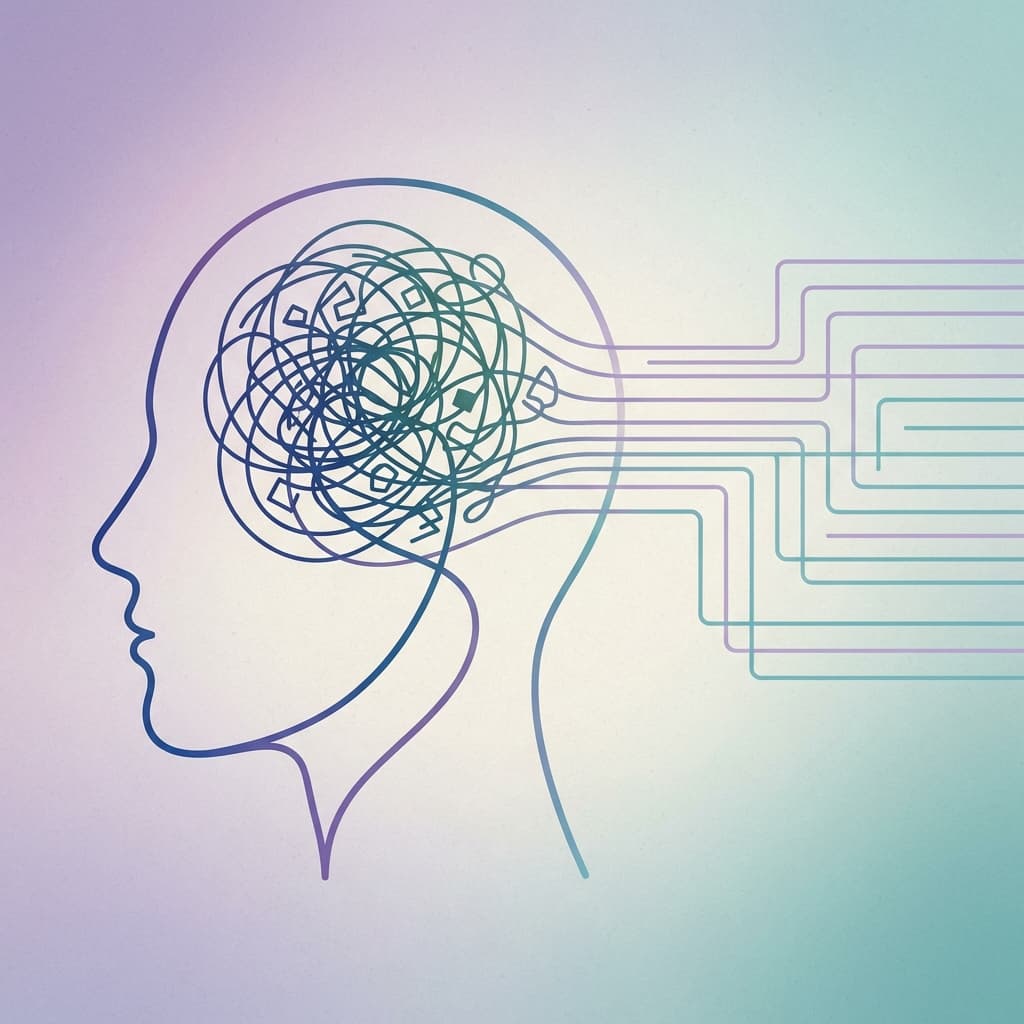
When emotions hit a 10 out of 10, logic doesn't work. You can't "think your way out" of a panic attack. You can't "reason" with rage.
This is where TIPP comes in.
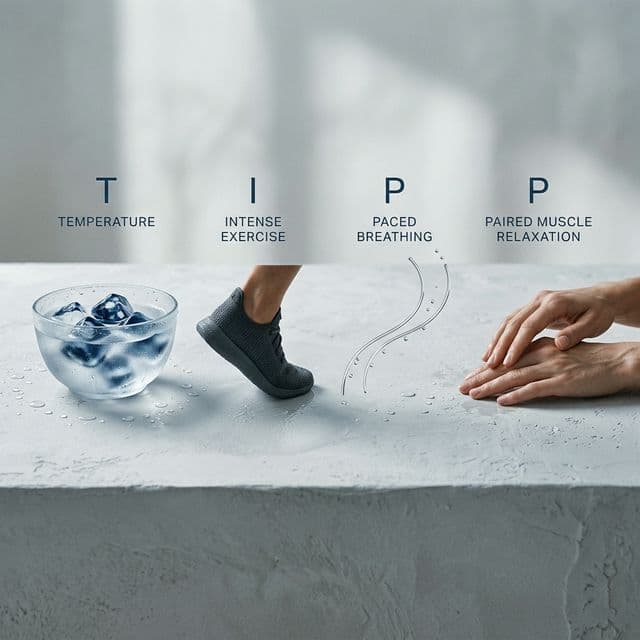
TIPP is an emergency protocol from Dialectical Behavioral Therapy (DBT)—a therapy originally designed for people with the most intense emotional dysregulation. It works by hacking your biology to force a state change.
What Does TIPP Stand For?
| Letter | Meaning | What It Does | |--------|---------|--------------| | T | Temperature | Shocks the nervous system | | I | Intense Exercise | Burns off adrenaline | | P | Paced Breathing | Activates parasympathetic | | P | Paired Muscle Relaxation | Releases tension |
You don't need to do all four. Use whichever one you can access in the moment.
T — Temperature (The Cold Shock)
The Fastest Option.
When you're in emotional crisis, dunk your face in ice-cold water for 30 seconds. Or: hold an ice cube to your wrists, neck, or temples.
Why It Works:
This triggers the Mammalian Dive Reflex—an ancient survival mechanism that:
- Drops your heart rate by up to 25%
- Redirects blood to vital organs
- Forces your nervous system into "rest" mode
Full Guide: Ice Dive Panic Relief
I — Intense Exercise
The Adrenaline Burner.
When you're flooded with fight-or-flight hormones, your body is primed to move. Don't fight it—use it.
Do 5-10 minutes of:
- Jumping jacks
- Running in place
- Sprinting up stairs
- Push-ups until failure
Why It Works:
Exercise metabolizes cortisol and adrenaline. It gives the stress hormones somewhere to go. After intense exertion, your body naturally rebounds into a calmer state.
P — Paced Breathing
The Regulator.
Slow, controlled breathing sends a direct signal to your vagus nerve: "We are safe."
The Protocol:
- Inhale for 4 seconds
- Exhale for 6-8 seconds (the exhale must be longer)
- Repeat for 2 minutes
Why It Works:
Extended exhales activate the parasympathetic nervous system. Your heart rate will drop within 60 seconds.
P — Paired Muscle Relaxation
The Tension Release.
When you're anxious, your muscles are clenched—often without you realizing it.
The Protocol:
- Tense one muscle group (e.g., clench your fists) for 5 seconds.
- Release completely.
- Notice the contrast between tension and relaxation.
- Move to the next muscle group (shoulders, face, legs).
Why It Works:
You can't be physically relaxed and emotionally anxious at the same time. Releasing muscle tension sends feedback to the brain that the threat is over.
Full Guide: Progressive Muscle Relaxation
When to Use TIPP
| Situation | Best TIPP Option | |-----------|-----------------| | Panic attack in public | Paced Breathing (silent) | | Rage/anger outburst | Intense Exercise | | Overwhelming sadness | Temperature (ice) | | Pre-meltdown at work | Paired Muscle Relaxation (subtle) | | Full crisis mode | Temperature + Exercise |
The Key Insight
TIPP works because it goes around the thinking brain. When you're at a 10, your prefrontal cortex is offline. You cannot access logic.
TIPP uses your body to change your brain state. Once your intensity drops to a 6 or 7, then you can use cognitive tools (like journaling or talking it out).
Conclusion
You now have a therapist-approved emergency kit in your back pocket. Next time you feel the wave rising, don't fight it with words. Fight it with TIPP.
Try This Now: Go to your freezer. Hold an ice cube to your wrist for 30 seconds. Notice what happens to your heart rate.
Next Read:
Budget Wellness Editorial
Wellness Researcher
Specializing in zero-cost mental wellness strategies and breathing techniques.
Join Our Wellness Community
Get one daily, zero-cost wellness habit delivered straight to your Telegram. No noise, just peace.
Join Telegram Community