Being a parent often feels like living in a state of constant motion. Between the school runs, the endless laundry, the meal prep, and the emotional labor of raising humans, finding a moment of "zen" seems laughable.
When you hear about mindfulness, you might picture someone sitting cross-legged on a cushion for 30 minutes in a silent room. And you think: "Who has time for that?"
Here is the truth: You don't need silence, and you don't need extra time.
Mindfulness isn't about escaping your life; it's about fully inhabiting it. It is the practice of paying attention to the present moment without judgment. For busy parents, it is a superpower that costs absolutely nothing but attention.
In this guide, we will explore 10 completely free mindfulness exercises designed specifically for the chaos of parenthood. These tools are your anchor in the storm.
What is "Micro-Mindfulness"?
Before we dive into the exercises, let's redefine what practice looks like. Micro-mindfulness involves short bursts of awareness—sometimes just 30 seconds to 2 minutes—integrated into tasks you are already doing.
The Benefits for Parents
- Reduced Cortisol: Lowers the stress response when a toddler is screaming.
- Emotional Regulation: Helps you respond rather than react.
- Connection: Allows you to truly see your child, rather than just managing them.
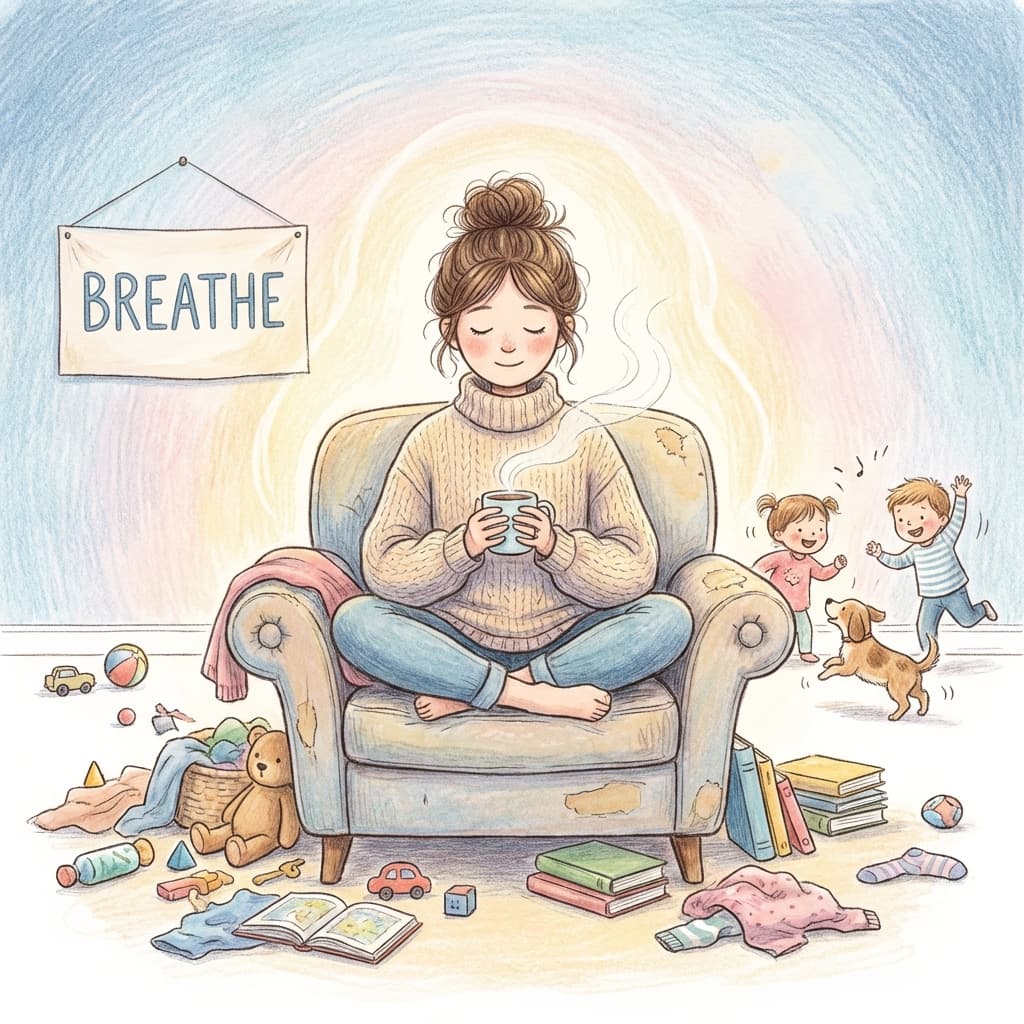
1. The Coffee Cup Grounding
Time: 2 Minutes
Best For: The morning rush
Most of us drink coffee or tea on autopilot, chugging it for the caffeine hit while packing lunches. Tomorrow, try this:
- Hold the warm mug in both hands. Feel the heat transferring to your palms.
- Inhale the steam. Identify the notes—is it nutty? Earthy? Sweet?
- Sip slowly. Feel the liquid move over your tongue and down your throat.
- Listen to the silence (or the noise) around you without engaging with it.
For those two minutes, you are not a chef, chauffeur, or referee. You are just a human enjoying a warm drink.
2. The "Doorway" Reset
Time: 5 Seconds
Best For: Switching transition zones (e.g., work to home, bedroom to kitchen)
Use doorways as physical triggers for a mental reset. Every time you walk through a door frame:
- Take one deep breath.
- Drop your shoulders away from your ears.
- Set an intention for the next room. (e.g., "I am entering the kitchen to cook, not to stress about the mess.")
3. The 5-4-3-2-1 Sensory Check
Time: 1-2 Minutes
Best For: When you feel overwhelmed or on the verge of snapping
This is a classic grounding technique used for anxiety, but it works wonders for parenting sensory overload.
- 5 things you can see (The pattern on the rug, a toy car, a cloud).
- 4 things you can feel (Your socks, the chair, the cool counter).
- 3 things you can hear (The fridge humming, birds, breathing).
- 2 things you can smell (Soap, dinner cooking).
- 1 thing you can taste (Toothpaste, coffee, water).
4. The Laundry Folding Meditation
Time: Duration of the chore
Best For: Turning "dead time" into "me time"
Chores are usually mental spaces for worry or planning. Reclaim them.
When folding laundry, focus purely on the sensation. The texture of the cotton, the warmth of the dryer, the smell of the detergent. Notice the colors. Fold with deliberate precision. If your mind wanders to the grocery list, gently bring it back to the fabric.
5. "Feet on the Floor" Breath
Time: 30 Seconds
Best For: Mid-tantrum (yours or theirs)
When a child is melting down, our instinct is to ramp up our energy to match theirs. Instead:
- Plant both feet firmly on the ground.
- Wiggle your toes. Feel the floor supporting you.
- Imagine roots growing from your heels into the earth.
- Say silently: "I am stable. I am here. This will pass."
6. The Red Light Pause
Time: Traffic light duration
Best For: Driving chaos
Traffic lights are usually sources of frustration. Reframe them as "Mindfulness Bells."
Every time you hit a red light, it is a mandatory break. Unclench your jaw. Loosen your grip on the steering wheel. Look at the sky. Breathe deeply until it turns green.
7. The "Warm Hands" Connection
Time: 10 Seconds
Best For: Reconnecting after a long day
When you first see your child or partner:
- Place a hand gently on their shoulder or back.
- Focus all your attention on the warmth of their skin through their clothes.
- Register that they are a living, breathing being that you love.
This breaks the "task-manager" mode and brings you back to relationship availability.
8. Listening to the Rain (Or Noise)
Time: 1 Minute
Best For: Bedtime routine
Instead of rushing through the story or bath:
Stop and listen. Expand your hearing to the furthest sound you can detect (a siren, wind). Then bring it closer (the house settling). Then closer (your child’s breath). This "sound sphere" exercise helps expand your perspective beyond the immediate stress.
9. The "Just One Breath" Rule
Time: 5 Seconds
Best For: Answering tough questions or disciplining
Before you implement a consequence or answer a "Why?" question:
Take one full inhale and exhale. That's it. That split-second pause creates space between stimulus and response, often preventing regretful yelling.
10. Gratitude Bookends
Time: 1 Minute
Best For: Waking up and falling asleep
- Morning: Before your feet hit the floor, think of one thing you are grateful for (e.g., a warm bed).
- Night: As you close your eyes, think of one "win" from the day (e.g., we laughed at dinner).
FAQ: Mindfulness for Parents
How do I remember to do these?
Start with one. Use a physical cue, like the "Doorway" trigger or a sticky note on your coffee pot.
Can I do these with my kids?
Absolutely. The "5-4-3-2-1" technique is brilliant for teaching kids emotional regulation.
What if my mind keeps wandering?
That is normal! The practice isn't about having a blank mind; it is about noticing when it wanders and bringing it back. That "return" is the mental push-up.
Conclusion
You don't need a retreat in Bali to be a mindful parent. You just need to reclaim the micro-moments in your day. These free mindfulness exercises are tools to help you build a reservoir of calm, so when the milk spills or the homework is lost, you can draw from it.
Try This Today: Choose just one of the exercises above (I recommend the Coffee Cup Grounding) and commit to it for 3 days.
Next Read:
- How to Reduce Stress at Work Without Spending Money
- 5-Minute Breathing Techniques for Instant Calm
- Daily Self-Care Routine on a Zero Budget
(Image Suggestion: Top: Parent holding a warm mug with soft lighting. Middle: Close up of hands holding a child's hand. Bottom: Peaceful bedroom scene.)
Budget Wellness Editorial
Wellness Researcher
Specializing in zero-cost mental wellness strategies and breathing techniques.
Join Our Wellness Community
Get one daily, zero-cost wellness habit delivered straight to your Telegram. No noise, just peace.
Join Telegram Community